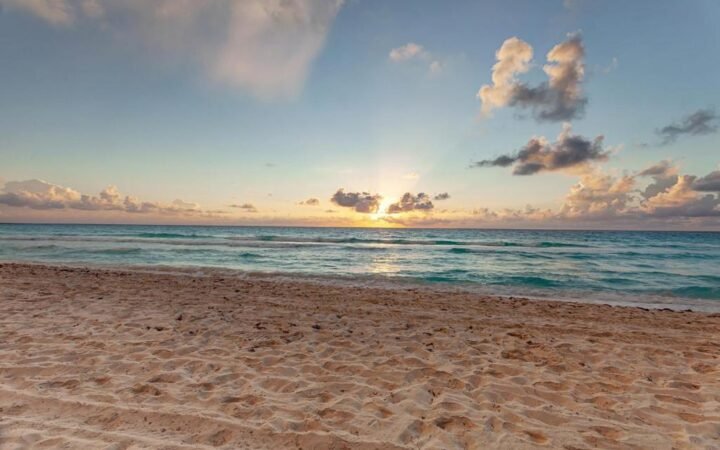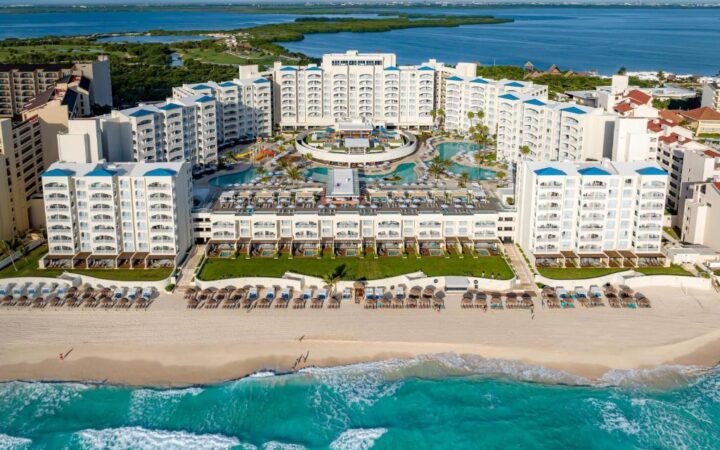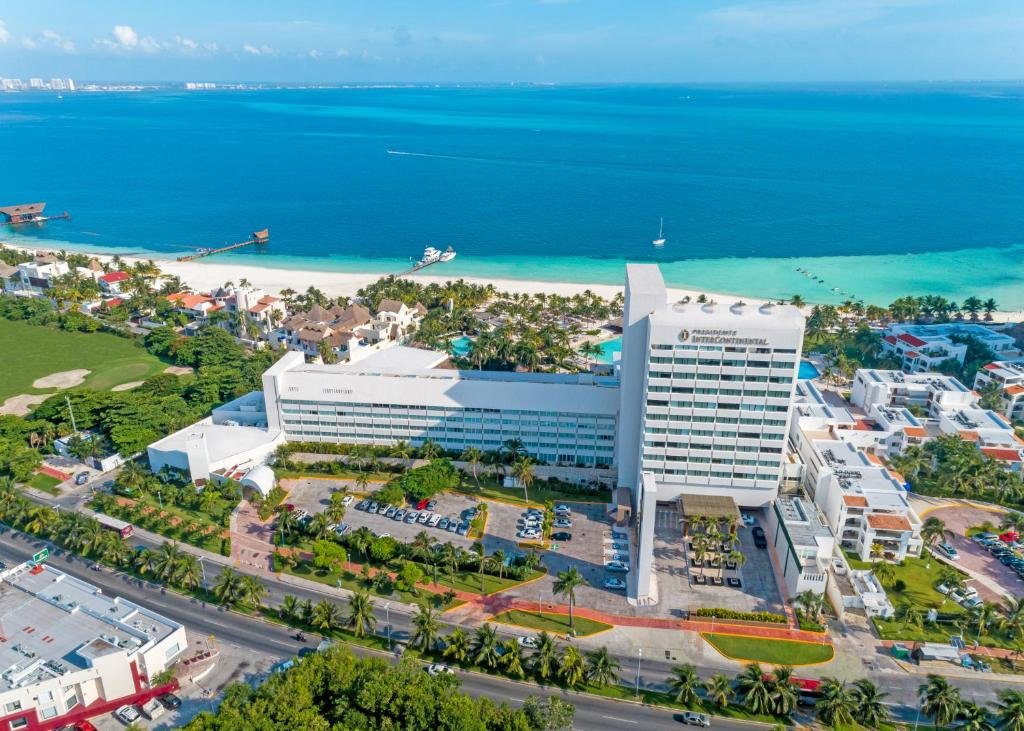
The best Cancun public beaches are Playa Delfines (Km 17–18) for wide-open sand and the Cancún sign, Playa Langosta and Playa Tortugas (Km 5–6.5) for calm, shallow swimming, and Playa Chac Mool and Playa Marlín (Km 10–13) for classic turquoise Caribbean surf close to the Party Center and the malls. Every beach in Mexico is public by law, so you can use any stretch of sand in the Hotel Zone for free. What changes from beach to beach is the access point, whether there are lifeguards and shade, and how big the waves are. This guide lists each public beach with its kilometer marker, swimming conditions, facilities and who it suits, as checked in October 2026.
One rule explains most of the differences. The Hotel Zone is shaped like a “7”: from Km 1 to Km 9 the beaches face north toward Isla Mujeres and the water is usually calm, while from about Km 9.5 to Km 22 they face east onto the open Caribbean, with bigger waves and more red or yellow flags. Our Cancun Hotel Zone map, Km by Km shows the layout if you are new to it.
Are All Beaches in Cancun Public?
Yes. Under Mexico’s Ley General de Bienes Nacionales, beaches and the 20-meter federal maritime-terrestrial zone (ZOFEMAT) behind the high-tide line are federal property for common use. A 2020 reform to Article 8 of that law states that access to beaches “may not be inhibited, restricted, obstructed or conditioned”, and owners who block it face heavy fines. In practice this means:
- You can walk along the sand in front of any resort and swim there.
- A resort can stop you from crossing its grounds and from using its loungers, towels, pools and bars. Those are private property.
- The practical limit is access. Most of the Hotel Zone is lined with hotels, so you reach the sand through the marked public accesses (“acceso público a la playa”) listed below.
If you want a lounger, a pool and lunch included, a resort day pass or one of the Cancun beach clubs is the paid alternative.
Cancun Public Beaches at a Glance
Kilometer markers are approximate. Local sources differ by half a kilometer for several beaches, so look for the blue public-access signs on Boulevard Kukulcán. “Blue Flag” marks the beaches certified for the 2025–2026 season by the municipality of Benito Juárez.
| Beach | Km | Side | Swimming | Facilities | Best for |
|---|---|---|---|---|---|
| Playa del Niño | Puerto Juárez (road to Punta Sam) | North, outside the Hotel Zone | Calm, shallow | Blue Flag, local food stalls | Local atmosphere, young kids |
| Playa Las Perlas | 2–2.5 | North | Calm | Blue Flag, palapas, parking, accessible ramps | Families, wheelchair users |
| Playa Linda | 4 | North | Calm | Pier and tour operators, few services | A quick dip before a boat tour |
| Playa Langosta | 5 | North | Very calm | Palapas, restrooms, free parking, restaurants nearby | Toddlers and weak swimmers |
| Playa Tortugas | 6–6.5 | North | Very calm | Isla Mujeres ferry pier, restaurants, water sports | Families, combining beach and ferry |
| Playa Caracol | 8.5–9 | North (near the corner) | Calm, clear, shallow | Ferry pier, little shade or parking | Clear water close to Punta Cancún |
| Playa Gaviota Azul (Forum) | 9–9.5 | Corner of the “7” | Moderate; watch currents | Beach clubs with paid loungers | Young adults, beach-club days |
| Playa Chac Mool | 9.5–10 | East | Waves; can have strong currents | Blue Flag, lifeguards | Classic Caribbean beach near the Party Center |
| Playa Marlín | 13 | East | Moderate to strong waves | Blue Flag, restrooms, showers, parking | Beach plus shopping |
| Playa Ballenas | 14–14.5 | East | Stronger waves and currents | Blue Flag, few services | Long walks, fewer people |
| Playa Delfines (El Mirador) | 17–18 | East | Powerful waves | Blue Flag, free palapas, restrooms, large free parking lot | Photos, open space, strong swimmers |
| Playa Coral (Mirador II) | 25 (Punta Nizuc area) | South end | Usually gentler than Delfines | Blue Flag, palapas, ramps, parking | Visitors with dogs |
North-Facing Public Beaches (Km 2–9): Calm Water
These beaches sit on the Bahía de Mujeres, sheltered from the open sea. The water is shallow, often flat and good for small children. The trade-off is narrower sand, more boat traffic near the piers, and some seagrass that can make the water look greener. One exception: during winter cold fronts (nortes), the wind blows straight onto this side and can stir it up for a day or two.
Playa Las Perlas (Km 2–2.5)
The first public beach after you leave downtown, and a favorite with local families on weekends. It holds the Blue Flag and has palapas, parking, an outdoor exercise area and a buoyed zone for kayaks and paddleboards. Local guides report access ramps and amphibious wheelchairs, which makes it one of the better options for visitors with reduced mobility. The water is calm, with only small waves.
Playa Linda (Km 4)
A small, calm beach next to a pier where several boat-tour and water-sports operators are based. It works for a quick swim before or after a tour, but services are limited and the boat traffic makes it less relaxing than Langosta next door.
Playa Langosta (Km 5)
Probably the calmest public beach in Cancun, and our first pick for toddlers and nervous swimmers. There is free parking (it fills early on weekends), restrooms, palapas that go quickly, and beach restaurants and bars nearby. A city bus stop sits right in front. The water is usually flat and turquoise, though seagrass can tint it green in autumn and winter.
Playa Tortugas (Km 6–6.5)
The liveliest of the calm beaches. Ultramar ferries to Isla Mujeres leave from the pier here, and the beach is lined with restaurants, bars and water-sports stands, including a bungee tower. The water is very calm and shallow, but expect music, vendors and boats coming and going. It is not a Blue Flag beach. Read our Playa Tortugas guide for more detail.
Playa Caracol (Km 8.5–9)
Just before the corner of the “7”, Caracol has some of the clearest shallow water on the north side. Ultramar also runs ferries from a pier here. Shade is limited and parking is mostly in nearby plazas, so come with an umbrella. The beach runs past the Grand Fiesta Americana Coral Beach, one of the resorts with the calmest water in the Hotel Zone.
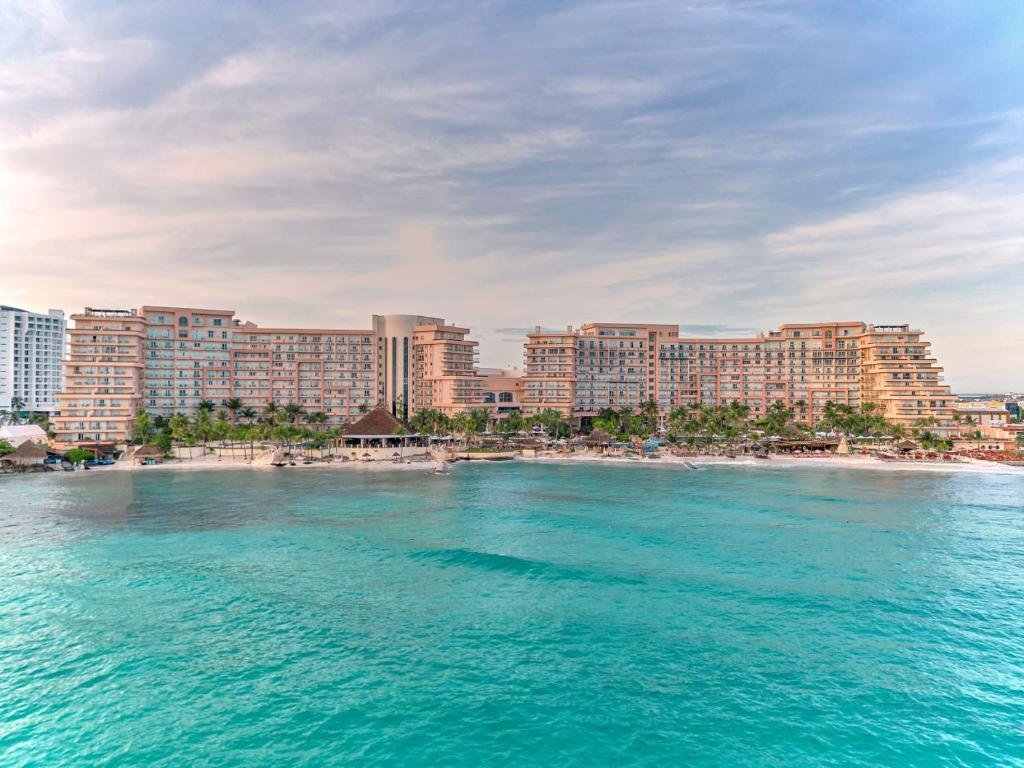
East-Facing Public Beaches (Km 9–25): Open Caribbean
This is the postcard Cancun: wide white sand, deep turquoise water and real waves. Most of the Blue Flag beaches are here, with lifeguards during the day. Swimming can be great on a green-flag morning and dangerous on a red-flag afternoon, so check the flag every time. The east side also catches more sargassum in the warm months.
Playa Gaviota Azul / Forum Beach (Km 9–9.5)
The sand behind the Party Center, Coco Bongo and the Forum by the Sea building. The beach clubs here rent loungers and play music, and the waves are good for bodyboarding. Currents can be tricky at the point, so stay close to shore. Expect noise from the clubs at night.
Playa Chac Mool (Km 9.5–10)
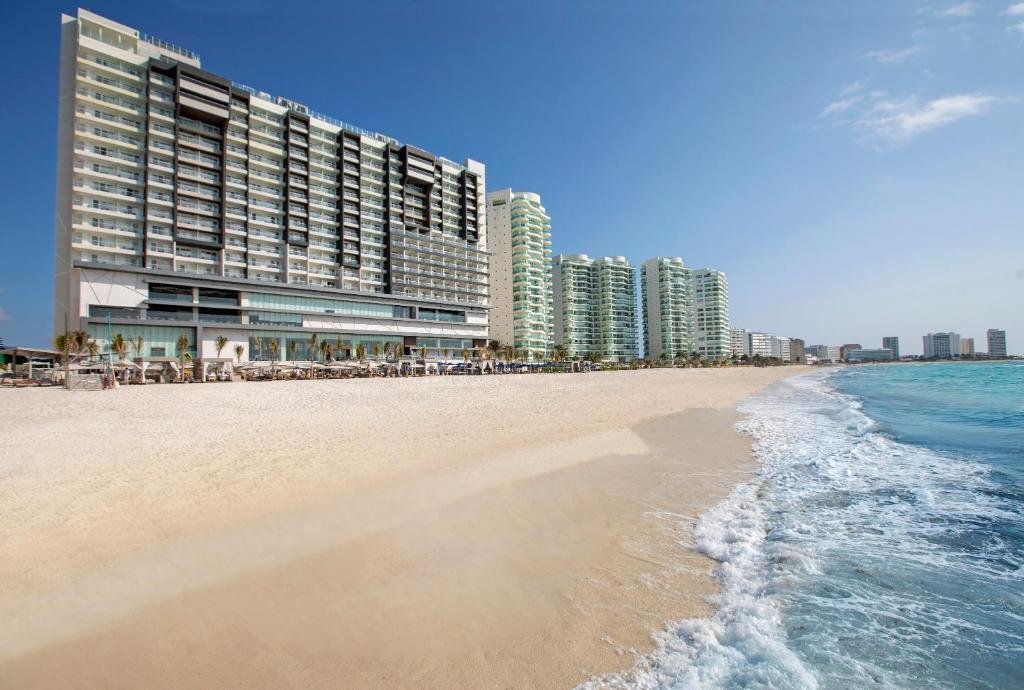
A Blue Flag beach with lifeguards, soft sand and open-sea waves, a short walk from Punta Cancún. The access is a narrow walkway beside the Royalton CHIC Cancun and is easy to miss. There are few palapas, so bring shade. It is popular with bodyboarders, and currents can be strong on windy days.
Playa Marlín (Km 13)
Behind the Plaza Kukulcán mall, Marlín is the easiest east-side beach to combine with lunch and shopping. It holds the Blue Flag and has restrooms, showers, lifeguards and free public parking. The waves are moderate to strong, and it fills with local families on weekends.
Playa Ballenas (Km 14–14.5)
A long, quieter stretch reached by a walkway between hotels in the area of the Hard Rock Hotel. It is a Blue Flag beach, but has few services beyond that, so bring water and shade. Waves and currents are stronger than on the north side. Sea turtles nest here in season, so respect any fenced nests.
Playa Delfines and El Mirador (Km 17–18)
The most famous public beach in Cancun, and the only long stretch of Hotel Zone sand with no hotel in front. The colorful CANCÚN letters stand on the lookout above. Delfines holds the Blue Flag and Platinum Beach certifications, with free palapas, restrooms, lifeguards and a large free parking lot. The waves are the most powerful of any public beach, so it is better for photos, walks and strong swimmers than for small children. In season the municipality fences off sea-turtle nests here. It is also the most exposed public beach to sargassum. Our Playa Delfines and El Mirador guide covers parking and the best times for photos.
Playa Coral / Mirador II (Km 25)
Near the south end of the Hotel Zone toward Punta Nizuc, Playa Coral is Cancun’s pet-friendly public beach: dogs are allowed on a leash. It holds the Blue Flag and has palapas, ramps, parking and lifeguards. Local guides describe the water as gentler than at Delfines. Pet rules (hours, leash, cleaning up) are set by the municipal beach authority, so check the signs at the entrance.
Public Beaches Outside the Hotel Zone
- Playa del Niño (Puerto Juárez): on the road from Puerto Juárez toward Punta Sam, north of downtown. Calm, shallow water, Blue Flag status and seafood stalls that are often cash only. It feels local, not touristy.
- Costa Mujeres and Playa Mujeres: the beaches north of Cancun are public too, but most of the shoreline is behind large resorts and access points are few.
- Playa Norte, Isla Mujeres: a short ferry ride away, with calm, shallow water that many visitors rate above anything in Cancun. Plan the day with our Isla Mujeres day trip guide.
Blue Flag Beaches in Cancun: What the Certification Means
For the 2025–2026 season, the municipality of Benito Juárez lists seven Blue Flag public beaches: Playa del Niño, Las Perlas, Chac Mool, Marlín, Ballenas, Delfines and Coral. The Blue Flag is an international award run by the Foundation for Environmental Education (FEE). It covers 33 criteria on water quality, environmental management, safety and services, and FEE México audited these seven beaches in May 2026. According to the municipality, the certified beaches have lifeguards and paramedics, accessibility ramps, restrooms and showers, and information modules staffed by the beach authority (Zofemat), with services running roughly 9:00 am to 6:30 pm.
Two cautions. First, the Blue Flag measures water quality and services, not wave size: Delfines is certified and still has some of the roughest water in the Hotel Zone. Second, calm beaches such as Langosta and Tortugas are not on the list, so do not count on lifeguards there all day.
Best Cancun Public Beach for Each Type of Traveler
- Toddlers and young kids: Playa Langosta, then Playa Tortugas.
- Wheelchair users: Playa Las Perlas, or another Blue Flag beach with ramps such as Delfines or Coral.
- Photos and the Cancun sign: Playa Delfines, early morning for soft light and fewer people.
- Bodyboarding and waves: Chac Mool, Gaviota Azul and Delfines, only on green or yellow flag days.
- Beach plus food and shopping: Playa Marlín (Plaza Kukulcán) or Playa Tortugas.
- Dogs: Playa Coral (Mirador II), the designated pet-friendly beach.
- Quieter sand: Playa Ballenas on a weekday.
Safety at Cancun Public Beaches: Flags, Currents and Sargassum
The real risk at Cancun’s beaches is the sea itself: on windy days the east-facing beaches can develop strong rip currents, even when the sky is perfect. Read the flag at the lifeguard tower before you swim:
| Flag | Meaning | What to do |
|---|---|---|
| Green | Calm conditions | Swim normally, still near the shore |
| Yellow | Caution: moderate waves or currents | Confident swimmers only; stay where you can stand |
| Red | Dangerous: strong waves or currents | Do not swim; paddle at the edge at most |
| Black | Beach closed to swimming | Stay out of the water |
If a current pulls you out, swim parallel to the shore until you are free of it, then head back in. Do not leave valuables on the sand while you swim.
Sargassum seaweed is the other variable. The east-facing beaches, especially Delfines, Marlín and Ballenas, usually get more than the north-facing ones, but no beach is immune: 2026 has been one of the heaviest sargassum years on record in Quintana Roo. Check the state’s daily sargassum map and our Cancun sargassum guide before you choose a beach.
Getting There and Practical Tips
- Bus: the R-1 and R-2 city buses run along Boulevard Kukulcán and stop near most public accesses. See our Hotel Zone bus guide.
- Parking: free lots at Las Perlas, Langosta, Tortugas, Marlín, Delfines and Coral. Lots at the calm north-side beaches fill by late morning on weekends and holidays.
- Shade: free palapas are first come, first served. Bring an umbrella for Chac Mool, Caracol and Ballenas.
- Glass and smoking: leave glass bottles at home, and do not smoke on the sand: Mexico’s national tobacco rules list beaches among smoke-free public spaces. Rules on alcohol have changed over the years, so follow the signs at each access.
- Cash: vendors, palapa restaurants and stalls at Playa del Niño often take cash only.
- Turtles: from about May to October, do not disturb fenced nests, use lights on the beach at night or let hatchlings be handled by anyone other than turtle-camp staff.
Find a Hotel Zone hotel near the beach you like best
Choosing where to stay? The north-facing side between Km 3 and Km 9 gives you calm water steps from your room, while the east side has the wider beaches and the best views. Our Cancun area guides compare each stretch.
Frequently Asked Questions
Are beaches in Cancun free to visit?
Yes. All beaches in Mexico are federal public property, and access to them may not be blocked or charged for. You only pay for extras such as lounger rentals, beach-club minimums or parking in private lots. Free palapas exist at several public beaches, including Delfines.
Can I use a resort’s beach in Cancun if I am not a guest?
You can walk and swim on the sand in front of any resort, because the beach itself is public. You cannot cross the resort’s grounds to get there or use its loungers, towels, pools or bars. Enter through a public access and walk along the shore instead.
Which public beach in Cancun has the calmest water?
Playa Langosta (Km 5) and Playa Tortugas (Km 6–6.5) on the north-facing side usually have the calmest, shallowest water. Playa Caracol and Las Perlas are also calm. During winter cold fronts, the north side can turn choppy for a day or two.
Is it safe to swim at Playa Delfines?
Only with care. Delfines has lifeguards, but it faces the open Caribbean and often has strong waves and currents. Swim only on green or yellow flag days, stay where you can stand, and choose a north-facing beach for young children.
Which Cancun beaches have lifeguards?
The seven Blue Flag public beaches (Playa del Niño, Las Perlas, Chac Mool, Marlín, Ballenas, Delfines and Coral) have lifeguards and paramedics during daytime service hours, roughly 9:00 am to 6:30 pm according to the municipality. Coverage at other beaches varies, so don’t rely on it.
Is there a dog-friendly beach in Cancun?
Yes. Playa Coral, also called Mirador II, near Km 25 at the south end of the Hotel Zone, allows dogs on a leash. Check the posted rules at the entrance, since hours and conditions are set by the municipal beach authority.