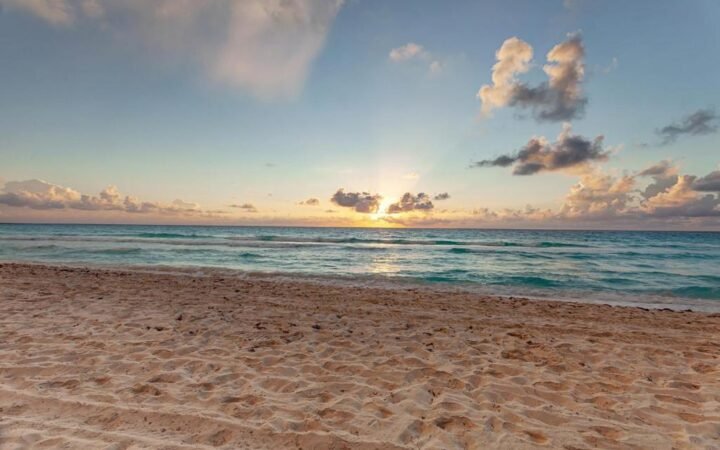
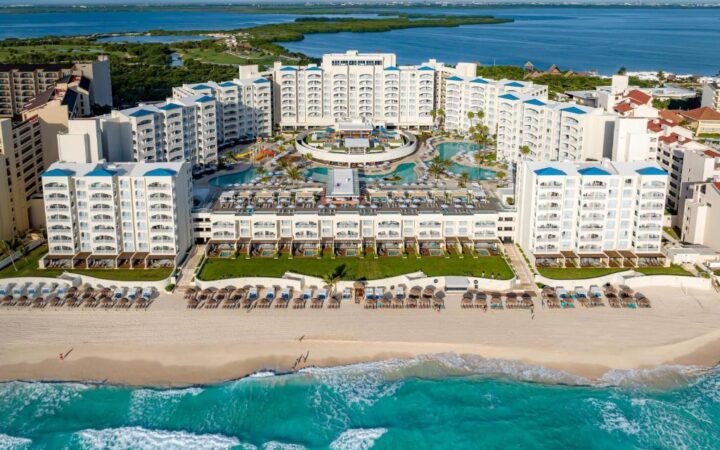
Stay in the Hotel Zone if the beach is the point of your trip: the resorts sit right on the sand, all-inclusive plans cover your meals, and the Punta Cancún nightlife is close by. Stay Downtown (El Centro) if your budget is tight, you want local food at local prices, or you’re using Cancún as a base for buses, ferries and day trips. Downtown has no swimming beach of its own, but the R-1 and R-2 city buses run along Boulevard Kukulcán 24 hours a day for about 12 pesos a ride in the Hotel Zone.
The two areas are only a short bus ride apart, yet they feel like different cities. Below we compare beaches, food prices, transport, safety at night and the kind of traveler each area suits, with practical tips for moving between them.
Hotel Zone vs Downtown at a Glance
| Factor | Hotel Zone (Zona Hotelera) | Downtown (El Centro) |
|---|---|---|
| Beach | On your doorstep; calm on the north side (Km 1–9), waves on the east side (Km 9.5–22) | No swimming beach; nearest calm beaches are a bus ride away in the north Hotel Zone |
| Typical stay | Large resorts, many all-inclusive | City hotels, guesthouses and hostels |
| Food | Resort dining or restaurants priced for visitors | Markets, taquerías and local restaurants at a fraction of Hotel Zone prices |
| Nightlife | Punta Cancún clubs and bars | Local bars, Parque de las Palapas in the evening |
| Getting around | R-1/R-2 buses along Blvd. Kukulcán, taxis | City buses, taxis, ADO bus terminal for regional trips |
| From CUN airport | About 15–25 minutes by car | ADO airport buses run to the downtown terminal; taxis and transfers too |
| At night | Busier, more security around resorts and clubs | UK government advises being very cautious after dark |
| Best for | Beach holidays, families, all-inclusive fans, short trips | Budget travelers, long stays, food lovers, independent explorers |
Beaches: The Hotel Zone’s Biggest Advantage
The Hotel Zone is a long, narrow strip of land between the Caribbean and the Nichupté Lagoon, shaped like a “7”. From Km 1 to Km 9 the beaches face north toward Isla Mujeres, with calmer water. From Km 9.5 to Km 22 they face east onto the open Caribbean, with bigger waves and more red or yellow flags. Our Hotel Zone map, Km 1 to 22 explains which resorts sit where.
Downtown has no beach worth swimming at, but beaches in Mexico are public by law, and the Hotel Zone has public access points. From downtown, the closest calm-water options are on the north side, such as Playa Langosta and Playa Tortugas. On the east side, Playa Delfines, with its viewpoint and big “Cancún” letters, is the classic open-ocean beach. Another good option is a ferry to Isla Mujeres: Ultramar boats leave from Puerto Juárez, just north of downtown, and from Playa Tortugas and Playa Caracol in the Hotel Zone.
Food and Prices
This is where downtown wins easily. Hotel Zone restaurants are priced for visitors, and a sit-down dinner on the strip usually costs considerably more than a similar meal in El Centro. That’s one reason so many Hotel Zone guests book all-inclusive: meals and drinks are already paid for.
Downtown is where people who live in Cancún actually eat. Good places to start:
- Mercado 28: souvenir stalls at the front, small family restaurants (fondas) further in.
- Mercado 23: a more local market for fruit and produce, near Avenida Tulum.
- Parque de las Palapas: downtown’s main square, with food stalls selling tacos, quesadillas and other snacks, liveliest in the evening.
- Neighborhood taquerías: look for busy places full of locals, which is the best sign of fresh food.
Whichever side you eat on, stick to purified water and ice from reliable places; our guide to drinking water and food safety in Cancún explains what to watch for.
Getting Around: Buses, Taxis and Ferries
Cancún’s city buses are the cheapest link between the two areas. Hotel Zone routes run around the clock, with fewer buses after midnight. Inside the Hotel Zone the route number hardly matters: any bus heading your way along Boulevard Kukulcán will do. The route only matters once you reach downtown.
| Route | Where it goes downtown | Windshield sign to look for |
|---|---|---|
| R-1 | Avenida Tulum, the ADO bus terminal and Mercado 23, continuing to Puerto Juárez | “Tulum”, “Juárez”, “Puerto Juárez” or “Hoteles” |
| R-2 | Toward Walmart, the Mercado 28 area and Avenida Kabah | “Kabah”, “Walmart” or “Hoteles” |
| R-15 | Mercado 28 and Walmart | “Kabah” or “Walmart” |
| R-27 | Avenida Tulum and Plaza Las Américas | “Plaza Las Américas” or “Américas” |
Bus fares and how to pay
The last officially authorized fare is 12 pesos per ride in the Hotel Zone. A rise to 15 pesos was announced and then frozen pending a fleet renewal, so carry a little extra. Pay the driver in cash as you board, with coins or small notes: drivers rarely have change for large bills and don’t take US currency.
Taxis in Cancún have traditionally charged fixed fares by zone rather than using meters. Agree on the fare in pesos before you get in. At night, ask your hotel or restaurant to call a taxi or use an official taxi rank (sitio). Ride-hailing apps operate in a contested legal situation in Quintana Roo, and disputes with taxi unions have occasionally turned violent, so don’t rely on them for airport or Hotel Zone pickups.
From the airport, the Hotel Zone is about 15–25 minutes by car. ADO buses run from the airport terminals to the downtown ADO station, where you can switch to an R-1 or a taxi. Our airport transfer guide covers private shuttles and the arrivals-hall sales pitch.
Safety at Night
The US State Department’s advisory for Quintana Roo, which includes Cancún, is Level 2, “Exercise increased caution” (last updated May 2026); always check travel.state.gov for the current level before you travel. The UK government specifically advises being very cautious after dark in downtown areas of Cancún, Tulum and Playa del Carmen, and notes that rival criminal groups have clashed in and around popular Cancún tourist areas.
In practice, the Hotel Zone is busier at night, with more security around resorts, malls and clubs. That doesn’t make it risk-free: Punta Cancún’s nightlife comes with its own risks, including drink spiking and tainted alcohol, both flagged by the UK government. Downtown is a living city, lively around Parque de las Palapas in the evening, but many streets empty out late. Common-sense rules apply in both areas:
- After dark, take a taxi called by your hotel or restaurant, or from an official rank, instead of walking empty streets.
- Never leave a drink unattended, and be wary of unusually cheap alcohol.
- Keep phones and cash out of sight, and carry only what you need for the night.
- Don’t buy drugs: it’s illegal and puts you in direct contact with criminal groups.
For a deeper look at scams, taxis and beach flags, read our guide to whether Cancún is safe.
Where to Stay: Resorts, City Hotels and the Middle Ground
Hotel Zone accommodation is dominated by large beachfront resorts, many of them all-inclusive, from family properties to adults-only luxury. Downtown offers city hotels, guesthouses and hostels with no beach, but much lower nightly rates and a more local feel.
If you can’t decide, the north Hotel Zone is a sensible middle ground: the water is calm, and the low kilometer markers are the closest part of the strip to downtown. Two resorts at that end that we track:

Occidental Costa Cancún - All Inclusive
- Usually calm north-facing beach
- One large pool with central fountain and shallow kids area
- Albatros buffet plus La Claraboya, México Lindo and La Trattoria
A 4-star, 358-room all-inclusive (formerly Barceló Costa Cancún) on usually calm north-facing water near downtown.

Hotel Riu Palace Peninsula - All Inclusive
- Calm, north-facing beach at Km 5.5, swimmable on most days
- Adults-only Elite Club (about 100 rooms) with private restaurant, pool and swim-up bar
- Nine restaurants and seven bars, incl. Duomo, Agave, Sakura, Krystal and a Steakhouse
Reopened on July 25, 2026 after a full interior renovation, Riu Palace Peninsula is a 618-room, 24-hour all-inclusive on calm north-facing water at Km 5.5, with an adults-only Elite Club.

Comparing downtown hotels as well? The search box below shows live rates for all of Cancún; use the map on the results page to compare downtown and Hotel Zone options. If you want an all-inclusive at a lower price point, see our list of the best cheap all-inclusive resorts in Cancún.
Compare Live Cancún Hotel Rates: Hotel Zone and Downtown
Who Should Stay Where
The Hotel Zone Suits…
- Beach-first travelers who want to step from the room onto the sand.
- Families who want pools, kids clubs and calm water on the north side.
- Short trips where a quick airport transfer matters.
- Anyone who wants everything paid up front with an all-inclusive plan.
Downtown Suits…
- Budget travelers and backpackers who don’t need a beachfront room.
- Food lovers who want markets and taquerías every night.
- Independent travelers using the ADO terminal for trips to Chichén Itzá, Valladolid or the Riviera Maya.
- Long stays, where Hotel Zone restaurant prices add up quickly.
A split stay also works well: a few downtown nights at the start or end of a trip for food and day trips, plus a few resort nights for pure beach time. If you want to be close to the clubs, our Punta Cancún guide covers the nightlife corner of the Hotel Zone.
Frequently Asked Questions
Is downtown Cancún safe for tourists?
Many visitors explore downtown without problems, especially by day and around busy areas like Parque de las Palapas and the markets. The UK government advises being very cautious after dark in downtown Cancún, and the US advisory for Quintana Roo is Level 2 (May 2026). Use taxis at night and check travel.state.gov before you go.
Is there a beach in downtown Cancún?
Not one worth swimming at. The nearest calm beaches are on the north side of the Hotel Zone, such as Playa Langosta and Playa Tortugas, a short bus ride away. You can also take a ferry from Puerto Juárez to Isla Mujeres.
How much is the bus from downtown to the Hotel Zone?
The last officially authorized fare is 12 pesos per ride in the Hotel Zone. A rise to 15 pesos was announced and then frozen, so check locally and carry small change. Pay the driver in pesos; US currency isn’t accepted.
Is it cheaper to stay downtown than in the Hotel Zone?
Room rates and meals are generally much cheaper downtown. Once you add buses or taxis to the beach and restaurant meals, a well-priced all-inclusive in the Hotel Zone can narrow the gap, especially for families, so compare the total cost of the trip rather than the nightly rate alone.
Which buses go from downtown to the Hotel Zone?
The R-1 runs along Avenida Tulum past the ADO terminal, and the R-2 serves the Walmart and Avenida Kabah side of downtown. Both run along Boulevard Kukulcán, and Hotel Zone routes run 24 hours with fewer buses after midnight.