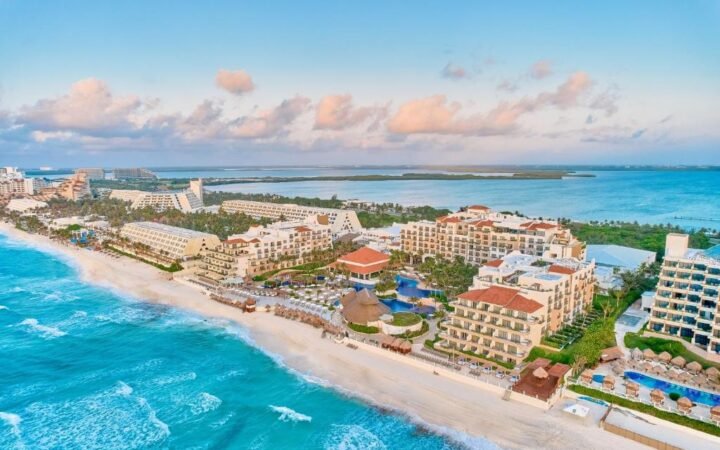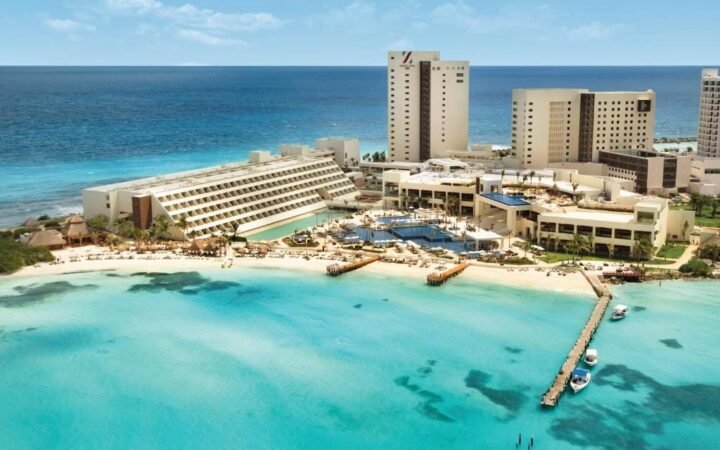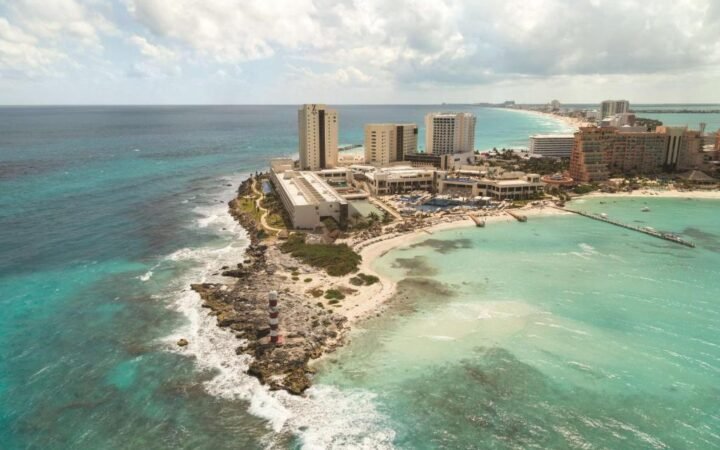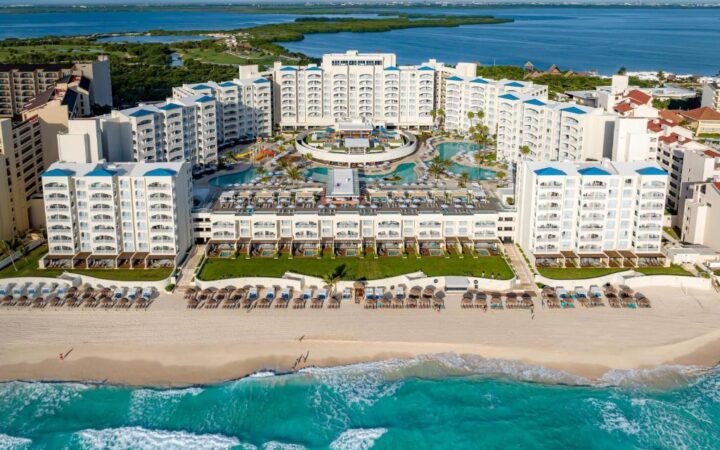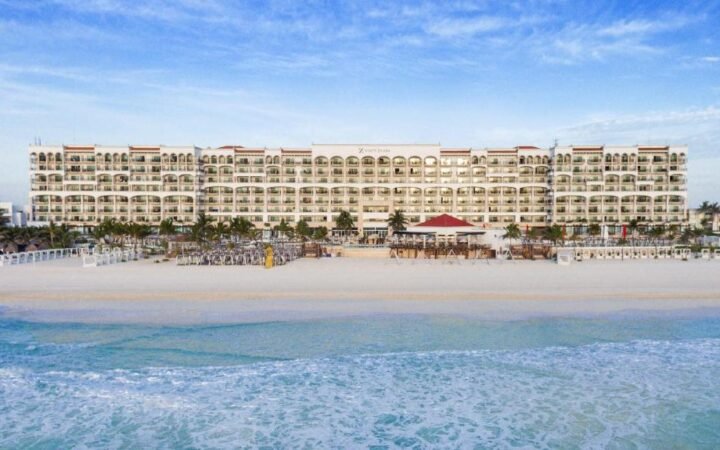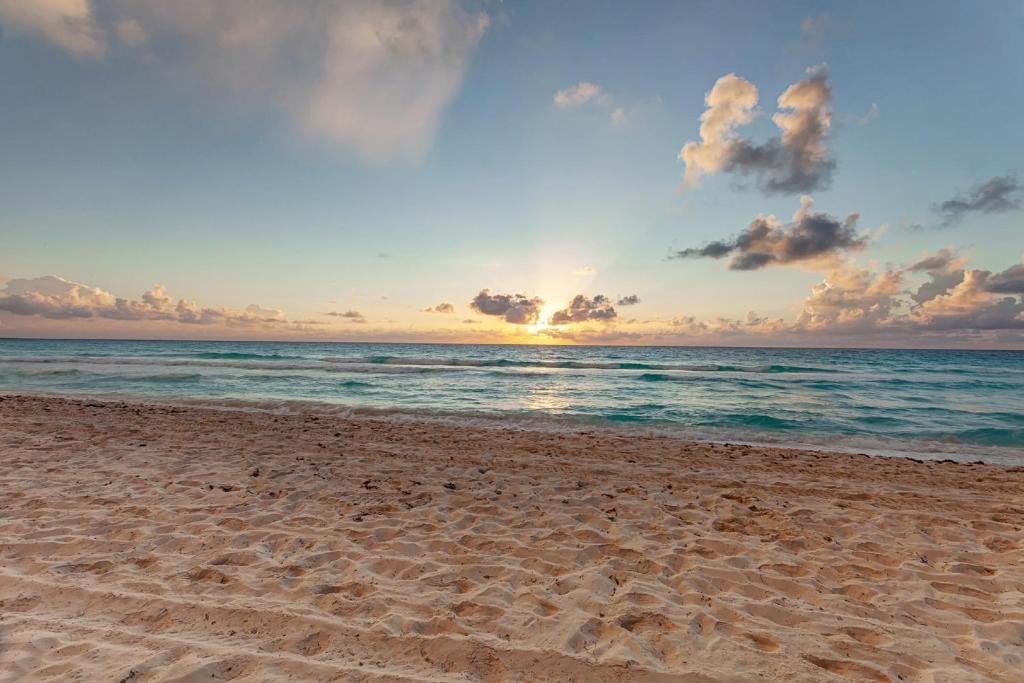
Cancun weather in January and February is warm, mostly sunny and the least humid of the year, with average highs of about 29–30 °C (84–86 °F), nights near 20 °C (68–69 °F) and a sea around 26.5 °C (80 °F). January gets more rain than most people expect, about 104 mm on 10 days, because winter cold fronts called nortes bring a day or two of wind, cloud and showers; February is much drier, with about 59 mm on 6 days. There are no hurricanes in these months, sargassum is usually at its lowest, and the main trade-off is high-season demand from US and Canadian winter travelers.
This guide is part of our month-by-month series. For the whole year in one table, see Cancun weather by month; to weigh weather against prices and crowds, read the best time to visit Cancun. Figures and dates were checked in October 2026, with holiday dates for January and February 2027.
Cancun Weather in January and February: The Numbers
Air temperatures and rainfall are the official climate normals for 1991–2020 from Mexico’s National Weather Service (SMN) for the Cancún station (no. 23155). Sea temperatures are NOAA’s satellite-based OISST averages for 1991–2020 for the open water off the Hotel Zone, the same sources as our year-round overview. Sunrise and sunset are calculated for Cancún, which stays on UTC−5 all year (the same clock as US Eastern time in winter).
| Average | January | February |
|---|---|---|
| Daytime high | 28.7 °C / 84 °F | 30.1 °C / 86 °F |
| Night-time low | 20.0 °C / 68 °F | 20.6 °C / 69 °F |
| Daily mean | 24.4 °C / 76 °F | 25.4 °C / 78 °F |
| Rainfall | 104 mm / 4.1 in | 59 mm / 2.3 in |
| Days with rain | 9.8 | 5.9 |
| Sea temperature | 26.5 °C / 80 °F | 26.4 °C / 79 °F |
| Sunrise / sunset | about 7:25 am / 6:15–6:35 pm | about 7:25–7:10 am / 6:35–6:50 pm |
Sources: SMN/CONAGUA Normal Climatológica 1991–2020, station 23155 Cancún; NOAA OISST v2.1 1991–2020 monthly mean. Averages, not a forecast.
The averages hide the range. On a still, sunny afternoon it can feel like summer: the SMN record highs are 36 °C (97 °F) in January (2020) and 38 °C (100 °F) in February (2001). After a strong front, the record lows are 13 °C (55 °F) in January and 12 °C (54 °F) in February. Those extremes are rare, but a windy evening at 19–21 °C (66–70 °F) feels cool when you have spent the day in a swimsuit.
January vs February: What Changes
- January is the coolest month of the year and the wetter of the two. Its 104 mm of rain is about the same as August’s, almost all of it delivered by fronts. Expect one or two gray, breezy spells in a week-long trip and plenty of sunny days in between.
- February is noticeably drier (59 mm, about 6 rainy days) and a little warmer, with longer afternoons. Many travelers consider it the most comfortable month in Cancun: hot enough for the beach, dry enough for long excursions, cool enough to sleep well.
- Both months share the coolest sea of the year, the lowest humidity and the lowest sargassum risk in a normal year.
Nortes: How Cold Fronts Shape a Winter Trip
Nortes are cold fronts that sweep down from the United States across the Gulf of Mexico. In Cancun a typical front brings one to three days of strong north winds, cloud, some rain and cooler nights, followed by clear, dry, fresh weather. For the 2026–2027 season the SMN forecasts 56 cold fronts across Mexico, above the long-term average of 50, including 8 in January and 7 in February; it links the higher count to El Niño. Not every front reaches the Yucatán Peninsula with force, but plan on at least one windy day per week.
- The calm side flips. The north-facing beaches between Km 1 and Km 9, normally the flattest water in Cancun, take a norte head-on and get choppy. The east-facing side from Km 9.5 can then be the calmer one for a day. Our Hotel Zone map by kilometer shows which way your beach faces.
- Boats may stay in port. The harbor master can close the port to small craft in strong wind, which cancels snorkel trips and catamarans and, on the worst days, slows the ferries. Keep Isla Mujeres for a calm day; our Isla Mujeres ferry guide covers the routes.
- The day after is the best day. Once a front clears, the air is dry and cool, which is ideal for a long day trip such as Chichén Itzá or the inland cenotes.
Watch the forecast, not the averages
Fronts are forecast several days ahead. Check the SMN (smn.conagua.gob.mx) forecast for Quintana Roo before you book boat tours, and schedule them on a clear day between fronts.
Sea Temperature and Swimming in Winter
At about 26.5 °C (79–80 °F), the Caribbean off Cancun in January and February is as cool as it gets, yet still warm enough for long swims. On a sunny, calm day the water feels refreshing rather than cold. On a windy day after a front it can feel brisk getting in, and wave flags go up: red or black means no swimming. Unheated pools in the shade can feel colder than the sea after a cold night, so if you travel with small children, ask whether your resort heats at least one pool.
On calm days between fronts, visibility is usually good, which makes this a good season for snorkeling and diving at the reefs and the MUSA underwater museum, as long as you leave room in your plans for a weather cancellation.

Hurricanes and Sargassum in January and February
Hurricanes: none. The Atlantic hurricane season runs from 1 June to 30 November, and January and February are well outside it. Winter weather risk comes from fronts, not tropical storms.
Sargassum: in a typical year, January and February are among the cleanest months on Cancun’s beaches. That is a pattern, not a guarantee. In 2026 the season started early: the University of South Florida’s satellite bulletins reported record-high sargassum in the Caribbean for both January and February and said the Mexican Caribbean coast had probably already seen landings. 2025 and 2026 were the two largest sargassum years on record. USF’s September 2026 bulletin expected amounts to keep falling until about November; whether early 2027 repeats the early start is not yet known. Check USF’s monthly outlook and the state’s daily sargassum map a week or two before you travel, and read our Cancun sargassum guide for which beaches usually stay cleaner.
Crowds, Prices and Holidays in January and February 2027
January and February are high season in Cancun. Demand comes mostly from the US and Canada, so prices stay above the summer and autumn months, but they are usually below the Christmas–New Year peak. The dates that move demand:
| Dates (2027) | Holiday or event | Demand |
|---|---|---|
| 1–6 January | New Year and Three Kings’ Day; Mexican school winter break ends 6 January | Peak |
| 7–28 January | No major holidays; winter escape travelers | High, but often the softest weeks of winter |
| 16–18 January | Martin Luther King Jr. Day weekend (US) | Busier |
| 29 January – 1 February | Mexican long weekend: school council Friday plus Constitution Day Monday (SEP calendar) | Busier with Mexican travelers |
| Week ending 9 February | Carnival season (Shrove Tuesday 9 February); Cancún’s program is announced by the city | Busier downtown |
| 13–15 February | Valentine’s Day, US Presidents’ Day and Family Day in several Canadian provinces | Very busy |
| Late February | First spring break groups arrive | Rising |
Carnival in Cancún is a local, mostly downtown festival with parades and concerts; in 2026 it ran for six days and included a parade in the city’s original downtown district. It is lively but does not take over the Hotel Zone. For the second half of February, adults-only and couples’ resorts tend to fill first around Valentine’s Day and the Presidents’ Day weekend, so book those early.
Most all-inclusive quotes already include the 21% in hotel taxes (16% IVA plus 5% lodging tax). The Cancún environmental fee, about 82 MXN per room per night paid at check-in, and the one-time VISITAX of about 285 MXN per foreign visitor, paid only at visitax.gob.mx, come on top. Our taxes, VISITAX and tipping guide explains each one.
Check Cancun hotel rates for January and February
Best Things to Do in Cancun in Winter
- Ruins and long excursions: the coolest, driest air of the year makes Chichén Itzá, Cobá and Tulum far more pleasant than in summer. Go early either way.
- Cenotes: they are shaded and sheltered from the wind, so they work even on a norte day. See our best cenotes near Cancun.
- Island days and snorkeling: book them flexibly for calm days between fronts.
- Not in season: whale shark swimming only opens on 15 May, and sea-turtle nesting starts around May.
Prices vary according to travel dates and availability.
What to Pack for Cancun in January and February
- Swimwear and summer clothes: daytime highs are still close to 30 °C (86 °F).
- A light sweater or long-sleeved layer and long trousers for windy evenings, boat trips and air-conditioned restaurants.
- A windbreaker or light rain jacket for norte days.
- High-SPF, biodegradable sunscreen and a hat: the sun is strong even when the breeze makes it feel mild.
- A rash guard if you plan to snorkel a lot, since the water feels cooler after 30–40 minutes.
The full list, including what you can leave at home, is in our Cancun all-inclusive packing list.
Is January or February a Good Time to Visit Cancun?
Yes, for most travelers. Choose these months if you want comfortable heat, low humidity, no hurricane risk and, in a normal year, the cleanest beaches. February is the safer bet for sunshine; mid-to-late January is often the better value. Think twice if you need guaranteed flat water every day (fronts make the sea choppy for a day or two), if you want the warmest possible sea, or if you are on a tight budget, since this is high season. For warmer water and fewer US travelers, look at Cancun weather in November and December (before Christmas); for the driest, sunniest stretch, see Cancun weather in March and April. The other months are covered in May and June, July and August and September and October, and more planning help is in our Cancun travel tips.
Frequently Asked Questions
Is it warm enough to swim in Cancun in January?
Yes. The sea averages about 26.5 °C (80 °F) in January and the average high is 28.7 °C (84 °F). On calm, sunny days swimming is comfortable; after a cold front the water can be choppy and the wind makes it feel cooler getting out.
Does it rain a lot in Cancun in January?
More than in the rest of the dry season. January averages 104 mm of rain on about 10 days (SMN 1991–2020), mostly during cold fronts that bring one to three cloudy, windy days. February is much drier, with about 59 mm on 6 days.
How cold does it get in Cancun in February?
Not very. The average low is 20.6 °C (69 °F). After a strong front, nights can drop to the mid-teens Celsius (high 50s °F); the SMN record low for February is 12 °C (54 °F), set in 1998. A light sweater is enough.
Is there sargassum in Cancun in January and February?
Usually very little, as these are normally the lowest-risk months. In 2026, however, satellite data showed record sargassum in the Caribbean from January, with early landings on the Mexican coast. Check the University of South Florida’s monthly outlook and local reports before you travel.
Is January or February cheaper in Cancun?
Both are high season. The weeks from about 7 to 28 January are often the softest of the winter, after the holiday rush. February rises toward the Valentine’s Day and Presidents’ Day weekend and the first spring break groups at the end of the month. Compare live rates for your exact dates.