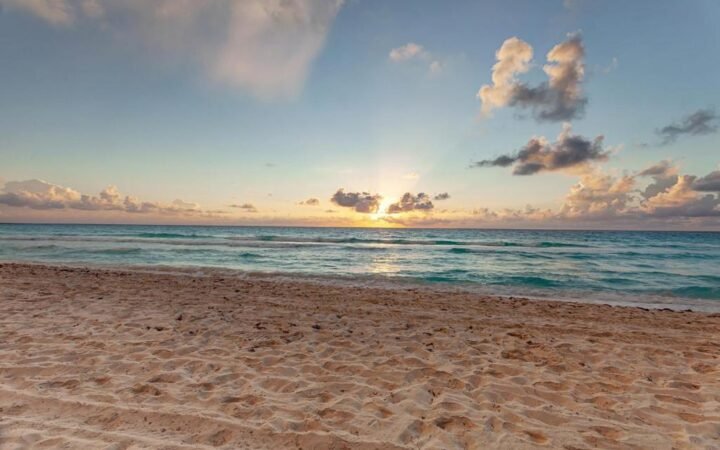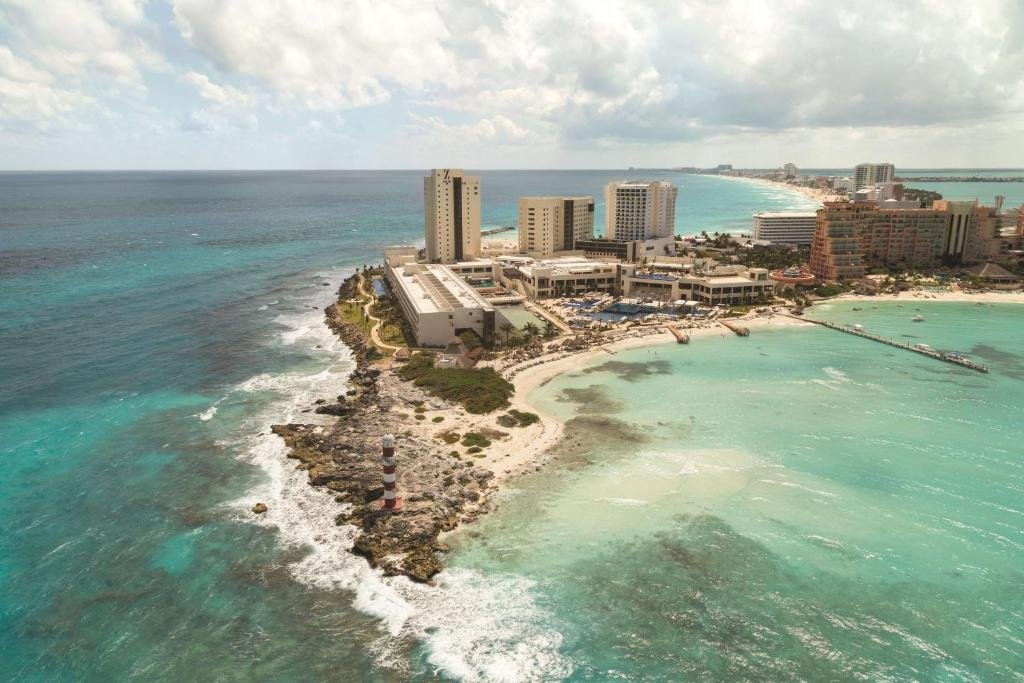
Cancun weather in September and October is hot, humid and the wettest of the year, at the peak of the Atlantic hurricane season, with the warmest sea of the year at about 29 °C (84–85 °F). Official averages give highs of 34 °C (94 °F) in September and 32 °C (90 °F) in October, with about 182 mm of rain on 14 days in September and 277 mm on 16 days in October, the rainiest month. Most days still have sunshine between showers, sargassum is usually easing, and these are the quietest, cheapest months in Cancun. The real trade-off is the small but serious chance that a tropical storm or hurricane disrupts your trip.
This guide is part of our month-by-month series. For the whole year in one table, see Cancun weather by month; to weigh weather against prices and crowds, read the best time to visit Cancun. Figures and dates were checked in October 2026.
Cancun Weather in September and October: The Numbers
Air temperatures and rainfall are the official 1991–2020 climate normals from Mexico’s National Weather Service (SMN) for the Cancún station (no. 23155). Sea temperatures are NOAA’s satellite-based OISST averages for 1991–2020 for the water off the Hotel Zone, the same sources as our year-round overview. Sunrise and sunset are calculated for Cancún, which stays on UTC−5 all year.
| Average | September | October |
|---|---|---|
| Daytime high | 34.2 °C / 94 °F | 32.2 °C / 90 °F |
| Night-time low | 24.6 °C / 76 °F | 23.7 °C / 75 °F |
| Daily mean | 29.4 °C / 85 °F | 27.9 °C / 82 °F |
| Rainfall | 182 mm / 7.1 in | 277 mm / 10.9 in |
| Days with rain | 14.4 | 16.4 |
| Sea temperature | 29.2 °C / 85 °F | 28.8 °C / 84 °F |
| Sunrise / sunset | about 6:30–6:40 am / 7:05–6:35 pm | about 6:40–6:50 am / 6:35–6:15 pm |
Sources: SMN/CONAGUA Normal Climatológica 1991–2020, station 23155 Cancún; NOAA OISST v2.1 1991–2020 monthly mean. Averages, not a forecast.
These averages are shaped by a few extreme months. October 2005, the month of Hurricane Wilma, brought 1,188.8 mm (about 47 in) of rain to the station, including 770 mm on 21 October alone; September 1995 brought 540 mm. Those storms pull the averages up, so a typical September or October is often drier than the table suggests, while a bad one is much wetter.
September vs October: What Changes
- September is still full summer: hot, very humid and stormy, with the warmest sea of the year (29.2 °C / 85 °F). It includes the statistical peak of the hurricane season, around 10 September. It is also the quietest month for visitors.
- October is the wettest month on average, as tropical moisture meets the first cold fronts of the season, but the heat begins to break: highs drop to about 32 °C (90 °F) and humidity eases, especially in the second half. Hurricane risk stays high in the first half and falls toward November.
How It Rains in September and October
On most days, rain comes as a heavy shower or thunderstorm, often in the afternoon or overnight, with sun before and after. The “days with rain” figure counts any day with measurable rain, so 14–16 rainy days does not mean two lost weeks. What makes these months different from summer is the longer gray spells: a tropical wave, a storm passing at a distance or, in October, an early cold front stalling over warm, humid air can bring two or three days of steady rain, flooded streets and choppy seas. The SMN forecasts 3 cold fronts across Mexico in September and 7 in October for the 2026–2027 season; only some reach Cancun.
- Book boat trips and long excursions for the morning, and keep at least one flexible day.
- Choose a resort where you would happily spend a rainy day: covered restaurants, a spa, indoor activities.
- Have rainy-day options ready: cenotes, the Maya Museum, the malls and the parks covered in our Xcaret vs Xel-Há vs Xplor guide.
Hurricane Risk in September and October
The Atlantic hurricane season runs from 1 June to 30 November. According to NOAA’s National Hurricane Center, it peaks around 10 September, with most activity between mid-August and mid-October, which makes these the riskiest months for the Mexican Caribbean. Direct hits on Cancun are not an annual event, but the record is clear: Hurricane Gilbert (September 1988), Hurricane Wilma (October 2005) and Hurricane Delta (October 2020) all made landfall on the northern Quintana Roo coast near Cancun. Far more often, a storm passing nearby brings a few days of heavy rain, closed beaches and cancelled ferries and tours.
2026 was forecast as below normal by NOAA because of El Niño, and the Atlantic’s first hurricane, Isaias, did not form until 8 October, in the Bay of Campeche, before striking the US Gulf Coast. As of 23 October 2026, none of the season’s named storms had hit the Cancun area. That says nothing about next year, so plan as if any September or October could bring a storm.
Protect a September or October trip
Buy travel insurance that covers named storms when you book, because policies bought after a storm is named usually exclude it. Prefer free-cancellation rates, read any hurricane policy your resort or airline offers, and follow the National Hurricane Center (nhc.noaa.gov), Mexico’s SMN (smn.conagua.gob.mx) and Quintana Roo civil protection’s color-coded alerts in the week before you fly.
If a storm does approach while you are there, large resorts have hurricane protocols, may move guests to interior rooms or shelters, and keep guests informed. Follow hotel and civil protection instructions. Our Cancun safety guide covers emergency contacts and practical precautions.
Sea Temperature, Swimming and Sargassum
The sea is at its warmest: about 29.2 °C (85 °F) in September and 28.8 °C (84 °F) in October. On calm days the north-facing beaches between Km 1 and Km 9 are the flattest; after storms and on windy days, swell and red flags are common on the east-facing beaches from Km 9.5, and visibility for snorkeling drops for a day or two. Check our Hotel Zone map by kilometer to see which side your hotel faces.
Sargassum usually eases in autumn. In 2026, after a record year, the University of South Florida’s September bulletin reported that the amount in the Atlantic belt had halved from August, which had halved from July, and expected the decline to continue until about November. The western Caribbean was the exception, still above the 75th percentile for September. Quintana Roo’s environment ministry said seaweed kept arriving after September in smaller amounts, and in early October the Navy reported low levels offshore while some beaches still had moderate to heavy landings. Check the state’s daily sargassum map and our Cancun sargassum guide.

Crowds, Prices and Holidays in September and October
This is Cancun’s low season. Mexican schools are back from late August, US and Canadian summer holidays are over, and hurricane risk keeps many travelers away, so prices are usually the lowest of the year, with plenty of choice. Dates that still move demand:
| Date | Holiday or event | Demand |
|---|---|---|
| First Monday of September (6 September 2027) | US Labor Day weekend | Busier weekend |
| 15–16 September | Mexican Independence: the Grito on the night of the 15th, holiday on the 16th | Celebrations downtown; more Mexican visitors |
| 17 September | Whale shark swimming season ends | — |
| Mid-September to early October | No major holidays; peak of hurricane season | Lowest of the year |
| Second Monday of October (11 October 2027) | Canadian Thanksgiving; US Columbus / Indigenous Peoples’ Day | Busier long weekend |
| 31 October | Halloween (a Sunday in 2027) | Busier weekend |
| 30 October – 2 November 2026 | Día de Muertos long weekend in Mexico; Festival de Vida y Muerte at Xcaret park | Busy with Mexican travelers |
Low season is also when resorts schedule renovations. Hard Rock Hotel Cancun, for example, has been closed for a full renovation since early August 2026, with a reopening planned for late December 2026. Before you book, check that the pools and restaurants you care about will be open on your dates, and read recent guest reviews.
Most all-inclusive quotes already include the 21% in hotel taxes; the Cancún environmental fee (about 82 MXN per room per night, paid at check-in) and the one-time VISITAX (about 285 MXN per foreign visitor, paid only at visitax.gob.mx) come on top. Our taxes, VISITAX and tipping guide explains each one.
Check Cancun low-season rates for September and October
Things to Do in September and October
- Last weeks of the whale shark season: tours run until 17 September; see our whale shark tour guide.
- Sea turtles: the nesting season runs from about May to October. If you see nests or hatchlings on the beach, keep lights off and keep your distance.
- Independence Day: the Grito on the night of 15 September is celebrated with music and Mexican food in town and at many resorts.
- Día de Muertos season: from late October, altars and events appear in town and at resorts; Xcaret’s Festival de Vida y Muerte runs 30 October to 2 November in 2026, its 20th edition.
Prices vary according to travel dates and availability.
What to Pack for Cancun in September and October
- Light, quick-dry clothes and sandals that can get wet.
- A light rain jacket or compact umbrella, and a dry bag for your phone and documents.
- Insect repellent: mosquitoes are most active after rain.
- High-SPF, biodegradable sunscreen; the sun is strong between showers.
- Printed or offline copies of your insurance, booking terms and airline contacts.
For the complete list, see our Cancun all-inclusive packing list.
Is September or October a Good Time to Visit Cancun?
It can be, for the right traveler. Choose these months if price and space matter most, you love warm water, you can book flexible rates with insurance, and you are happy to swap a beach day for a spa or cenote day when it rains. Late October is the better bet of the two: the heat eases and the hurricane risk starts to fall. Avoid them if your dates are fixed and cannot change, if you are planning a wedding or a once-in-a-lifetime trip where a lost week would hurt, or if you dislike humidity. For drier, safer weather, look at Cancun weather in November and December or January and February; for summer, read Cancun weather in July and August. Spring is covered in March and April and May and June, and more planning help is in our Cancun travel tips.
Frequently Asked Questions
Is September a good time to visit Cancun?
It is the cheapest and quietest month, with the warmest sea, but also the peak of hurricane season and one of the wettest months (about 182 mm on 14 days). It suits flexible travelers with insurance; avoid it if your dates cannot change.
Is October the rainiest month in Cancun?
Yes. October averages about 277 mm of rain on 16 days, according to SMN 1991–2020 normals, the highest of any month. Extreme years such as 2005 (Hurricane Wilma) pull that average up, and many Octobers bring mostly short showers.
What are the chances of a hurricane in Cancun in September or October?
Higher than at any other time of year, but a direct hit in any given week is unlikely. Gilbert (1988), Wilma (2005) and Delta (2020) made landfall near Cancun in these months. More often a nearby storm brings a few days of rain and rough seas, so insure your trip and book flexible rates.
What is the water temperature in Cancun in September and October?
The warmest of the year: about 29.2 °C (85 °F) in September and 28.8 °C (84 °F) in October, based on NOAA’s 1991–2020 satellite averages.
Is there sargassum in Cancun in October?
Usually less than in summer, as amounts in the Caribbean decline through the autumn. In October 2026, levels offshore were low but some beaches still had landings after a record year. Check the daily sargassum map before you go.