Cancún vs Los Cabos comes down to the water. Pick Cancún if you want to swim from the beach in warm, turquoise Caribbean water, choose from the widest range of all-inclusive resorts in Mexico, and take day trips to Mayan ruins and cenotes. Pick Los Cabos if you want dramatic desert-meets-ocean scenery, a much drier climate, winter whale watching, sport fishing and golf, and you are happy to swim mostly in pools. Many Los Cabos beaches, especially on the Pacific side, are too rough for safe swimming.
Both are Mexico’s top resort destinations, both have big international airports, and both can be a fine vacation. They are very different places, though. Cancún sits on the Caribbean coast of the Yucatán Peninsula. Los Cabos (Cabo San Lucas, San José del Cabo and the Tourist Corridor between them) sits at the tip of the Baja California peninsula, where the Sea of Cortez meets the Pacific. Below we compare beaches, weather, resorts, activities, flights and cost, using official tourism and government sources and long-term climate averages, checked in October 2026.
Cancún vs Los Cabos at a Glance
| Factor | Cancún | Los Cabos |
|---|---|---|
| Sea | Caribbean: warm, turquoise, white sand | Sea of Cortez and Pacific: deep blue, cooler, golden sand |
| Swimming from the beach | Easy on the calm north-facing beaches; more waves on the east side | Only on certain Sea of Cortez beaches; most of the Pacific side is unsafe |
| Sea temperature (averages) | About 79°F (26°C) in winter to 84°F (29°C) in late summer | About 70–73°F (21–23°C) from February to June; about 84°F (29°C) in September–October |
| Rain | Wet season roughly June to October; about 53 in (1,340 mm) a year | Desert; about 12 in (295 mm) a year, mostly July to October |
| Hurricane season | Atlantic: June 1 to November 30 | Eastern Pacific: May 15 to November 30 |
| Sargassum seaweed | Yes, mainly in the warmer months | No |
| Resorts | Huge all-inclusive choice, budget to ultra-luxury | Smaller, more upscale; many luxury room-only resorts and villas |
| Signature trips | Cenotes, Chichén Itzá, Tulum, Isla Mujeres, eco-parks | El Arco by boat, whale watching, sport fishing, golf, Todos Santos |
| Airport | CUN, with nonstop flights from many more cities | SJD, about 15 minutes from San José del Cabo and about 45–50 from Cabo San Lucas |
| Time zone | UTC−5 all year (same as US Eastern Standard Time) | UTC−7 all year (same as US Mountain Standard Time) |
Beaches and Swimming: The Biggest Difference
If swimming in the sea matters to you, this section decides it.
Cancún: calm water on the north side, waves on the east side
Cancún’s Hotel Zone is shaped like a “7.” The stretch from Km 1 to Km 9 faces north toward Isla Mujeres, and its water is usually calm, shallow and swimmable, often like a pool. From Km 9.5 to Km 22 the beach faces east onto the open Caribbean, with bigger waves and more red and yellow flags. Even there, the water is warm and many days are swimmable. Our Hotel Zone map from Km 1 to 22 shows which resorts sit where. Costa Mujeres, north of the city, also faces Isla Mujeres and usually has gentler water than the east-facing Hotel Zone.
The catch is sargassum. This floating seaweed arrives on Caribbean beaches mostly in the warmer months, and in a heavy year it can cover even the best beaches. North-facing beaches usually fare better, but none is immune. Our Cancún sargassum guide explains the timing. Los Cabos doesn’t get Caribbean sargassum at all.
Los Cabos: where you can (and can’t) swim
Los Cabos has beautiful beaches, but many are not for swimming. Strong surf, steep drop-offs and undertow are common, and visitors have drowned on beaches that looked calm. The rule of thumb:
- Pacific side (unsafe for swimming): the beaches facing the open Pacific west of the Cabo San Lucas arch, including Playa del Divorcio (Divorce Beach), the Pedregal area and Playa Solmar. They are fine for walking and sunsets, but lifeguard-free water and heavy shorebreak make them dangerous.
- Sea of Cortez side (swimmable spots): Visit Los Cabos lists five Blue Flag beaches as of April 2026: El Médano in Cabo San Lucas, Chileno and Santa María in the Tourist Corridor, and Palmilla and Acapulquito near San José del Cabo. Blue Flag beaches have lifeguards and marked swimming areas. Playa del Amor (Lover’s Beach), reached by water taxi, is usually swimmable on its Sea of Cortez side, but watch for boat traffic and a steep drop.
- Many resort beaches along the Corridor and in San José del Cabo have strong surf even when they look calm. Before you book, check whether your resort’s own beach is swimmable, and always obey the flags. A red flag means no swimming, and a black flag means the beach is closed.
The upshot: in Los Cabos you’ll often swim in the resort pool and drive or take a boat to a swimming beach. In Cancún you can usually walk out of your room into the sea. If you want water you can safely float in with young kids, Cancún’s north-facing beaches are hard to beat. Our Cancún public beaches guide rates each beach for swimming.
Weather: Humid Caribbean vs Dry Desert
Both are warm year-round, but they feel different. Cancún is tropical and humid, with frequent short showers in the wet season. Los Cabos is desert: sunny, dry, with cooler evenings in winter and very hot summers. The averages below come from long-term climate data (weather2travel) and are not forecasts.
| Season | Cancún | Los Cabos |
|---|---|---|
| December–February | Highs about 82°F (28°C), sea about 79°F (26°C); dry-season peak | Highs about 77–81°F (25–27°C), sea about 70–75°F (21–24°C); cool evenings; prime whale season |
| March–May | Highs 86–90°F (30–32°C), sea about 79–81°F (26–27°C); spring break crowds | Highs 79–86°F (26–30°C), sea about 70–72°F (21–22°C), the coolest water of the year; almost no rain |
| June–August | Highs about 90°F (32°C), sea 82–84°F (28–29°C); rain and sargassum season | Highs 88–91°F (31–33°C); sea warms from about 73°F (23°C) to 82°F (28°C); first summer storms |
| September–November | Wettest months (September, October); peak hurricane risk; sea about 82–84°F (28–29°C) | September is the rainiest month and hurricanes are possible; sea about 81–84°F (27–29°C) |
Both coasts get hurricanes. The Atlantic season (Cancún) runs from June 1 to November 30, and the Eastern Pacific season (Los Cabos) from May 15 to November 30. Both are most active from August to October. For winter sun, both work, but Cancún’s sea is noticeably warmer from January to June, while Los Cabos is drier and less humid. Month-by-month detail for Cancún is in our best time to visit Cancún guide.
Resorts: All-Inclusive Volume vs Upscale Boutique
Cancún has one of the largest concentrations of all-inclusive resorts anywhere, from value family hotels to adults-only luxury and butler suites. Prices cover a very wide range, there are lots of options in every style, and many resorts in the Hotel Zone are within a short taxi or bus ride of restaurants, clubs and malls. Newer, bigger resorts are spread out along Costa Mujeres. Start with our best all-inclusive resorts in Cancún list.
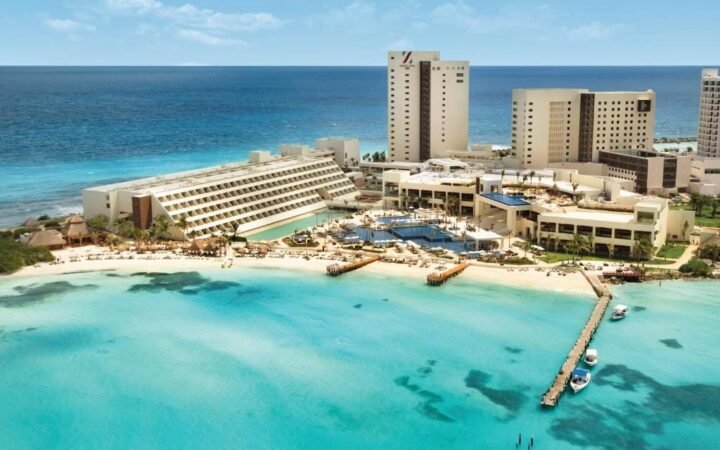
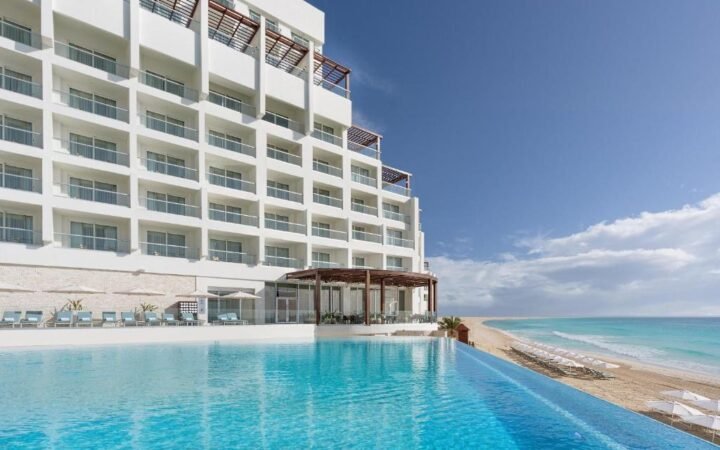
Los Cabos has fewer hotels and tilts more upscale. Big all-inclusive brands such as Riu, Hyatt Ziva, Secrets, Grand Velas and Garza Blanca all operate there, but a large part of the luxury market is room-only resorts, private villas and residences, where you pay for meals separately. Hotels are spread across Cabo San Lucas (lively marina and nightlife), San José del Cabo (quieter colonial town and art district) and the roughly 30 km Corridor between them, so you’ll rely on taxis or a rental car more than in Cancún. Like for like, expect Los Cabos to cost more, but compare live prices for your dates.
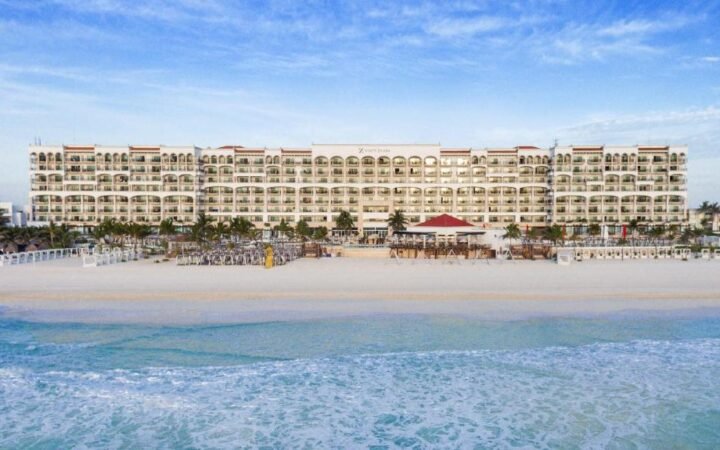
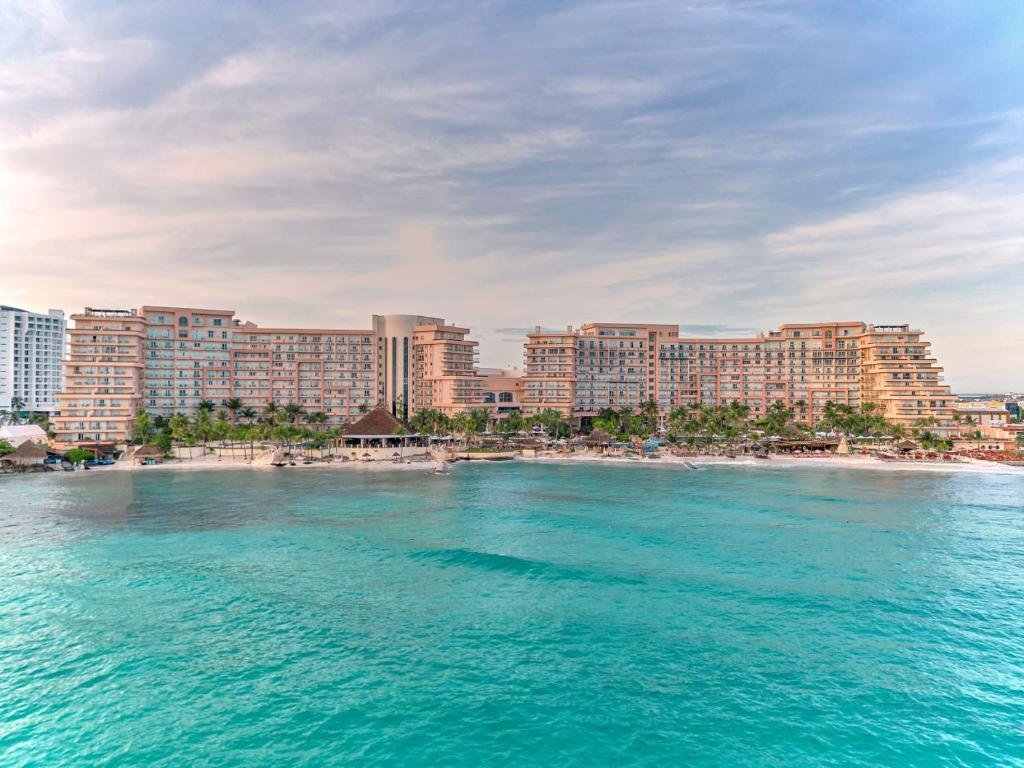
If swimmable sea water is your priority, these Cancún resorts sit on calmer stretches of coast. Grand Fiesta Americana Coral Beach is on the north-facing side of Punta Cancún, Occidental Costa Cancún is on Playa Linda at Km 4.5, and Majestic Elegance Costa Mujeres faces Isla Mujeres:
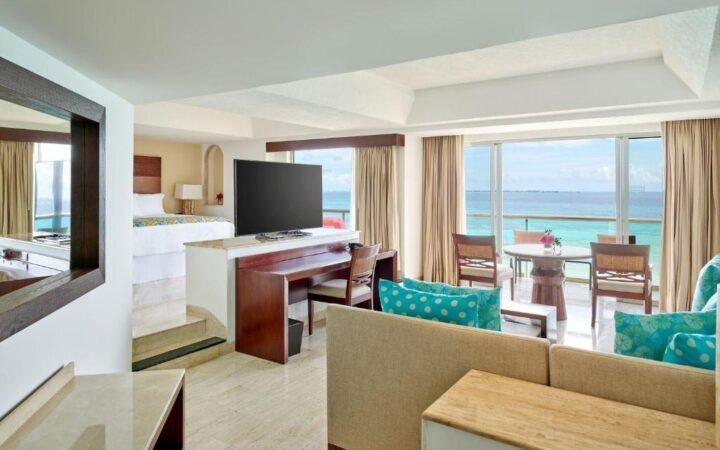
Grand Fiesta Americana Coral Beach Cancun - All Inclusive
- North-facing beach on Punta Cancún, usually calm
- Gem Spa: more than 4,000 m² and 26 treatment rooms
- Le Basilic French restaurant (surcharge for tasting menus)
All-suite resort on the north-facing side of Punta Cancún, usually calm water, with the Gem Spa and Le Basilic French restaurant.

Occidental Costa Cancún - All Inclusive
- Usually calm north-facing beach
- One large pool with central fountain and shallow kids area
- Albatros buffet plus La Claraboya, México Lindo and La Trattoria
A 4-star, 358-room all-inclusive (formerly Barceló Costa Cancún) on usually calm north-facing water near downtown.

Majestic Elegance Costa Mujeres - All Inclusive
- 570 suites, all with a jetted tub (most outdoors), plus swim-up and rooftop options
- 12 pools and 8 jacuzzis; kids club for ages 4–12 and a dedicated children’s pool
- Elegance Club (18+): butler, access to 7 pools, 5 exclusive bars and a private beach
Opened in late 2019, Majestic Elegance Costa Mujeres is a 570-suite all-inclusive on the coast facing Isla Mujeres, with 12 pools, seven restaurants and an adults-only Elegance Club.
Things to Do: Ruins and Cenotes vs Whales and Desert
| Interest | Cancún | Los Cabos |
|---|---|---|
| History and culture | Chichén Itzá, Tulum, Cobá and Ek Balam ruins; colonial Valladolid | San José del Cabo’s old town and galleries; Todos Santos, about an hour away |
| Swimming adventures | Cenotes (freshwater sinkholes), snorkeling, the MUSA underwater museum | Snorkeling at Santa María and Chileno; Cabo Pulmo reef as a full-day trip |
| Wildlife | Whale sharks (roughly June to September), sea turtles at Akumal | Humpback whales (official season from mid-December to mid/late April), sea lions at the arch |
| Islands and boats | Isla Mujeres, Cozumel, Holbox | Boat trips to El Arco and Lover’s Beach, sunset cruises |
| Sport | Golf, diving, deep-sea fishing | Famous for marlin fishing and championship golf; surfing on some beaches |
| Theme parks | Xcaret, Xel-Há, Xplor and other eco-parks | Desert ATV and off-road tours |
| Nightlife | Big-club scene in the Hotel Zone Party Center | Bars and clubs around the Cabo San Lucas marina |
Cancún wins on variety of day trips. In a week you can swim in a cenote, climb ruins and spend a day on Isla Mujeres; see our best cenotes near Cancún and our Xcaret vs Xel-Há vs Xplor comparison. Los Cabos wins on scenery and the sea itself: whales close to shore in winter, rock arches and some of the best sport fishing in Mexico.
Flights and Getting There
Cancún International Airport (CUN) is one of Mexico’s busiest and has nonstop flights from far more US and Canadian cities, plus Europe and Latin America. That usually means more choice and more competitive fares. Los Cabos International Airport (SJD) is mostly served from the US, Canada and Mexico. Rough nonstop flight times: from the West Coast, Los Cabos is about 2–2.5 hours away and Cancún about 4.5; from the East Coast, Cancún is about 3.5–4 hours and Los Cabos about 5.5–6. From the central US the times are closer.
On arrival, Cancún’s Hotel Zone is about 20–30 minutes from the airport. In Los Cabos, San José del Cabo is about 15 minutes away, and Cabo San Lucas and the far end of the Corridor about 45–50 minutes. Both airports have aggressive timeshare and transfer touts in arrivals, so pre-book your ride. Entry rules are the same in both places, since they are both Mexico. One difference: Quintana Roo’s VISITAX, about 285 MXN per foreign visitor, applies to Cancún and not to Los Cabos.
Cost and Safety
Cost: Cancún usually gives more resort for the money, thanks to the sheer number of all-inclusives and flights. Los Cabos tends to be more expensive for comparable hotels, and room-only stays add restaurant bills. In Cancún, budget for the 21% hotel taxes (usually included in all-inclusive quotes), the environmental sanitation fee of about 82 MXN per room per night and VISITAX. In Los Cabos, ask your hotel which taxes and local fees are included.
Safety: the US State Department rates Quintana Roo (Cancún) Level 2, “Exercise increased caution” (last updated May 2026), and Baja California Sur (Los Cabos) has also been rated Level 2. For both, the practical risks for visitors are similar: rip currents, unlicensed taxis, scams and heavy drinking. Check travel.state.gov for the current levels and read our guide to whether Cancún is safe.
Cancún or Los Cabos: Which Should You Choose?
Pros
- Choose Cancún for swimmable, warm turquoise sea, especially with kids
- Choose Cancún for the biggest all-inclusive choice and more flight options
- Choose Cancún for ruins, cenotes, islands and eco-parks
Cons
- Choose Los Cabos for dry desert weather and no sargassum
- Choose Los Cabos for winter whale watching, sport fishing and golf
- Choose Los Cabos for dramatic scenery and a quieter, upscale feel, if pool swimming is fine
For honeymoons, both work: Cancún for beach time and adults-only all-inclusives (see our best adults-only all-inclusives in Cancún), Los Cabos for sunsets, spas and fine dining. Still weighing other Caribbean options? Read Cancún vs Punta Cana, or browse all our destination and resort comparisons. If Los Cabos wins, you can compare resorts there for your dates:
Compare Los Cabos resorts for your dates
Frequently Asked Questions
Is Cancún or Cabo better for swimming in the ocean?
Cancún. Its north-facing Hotel Zone beaches and Costa Mujeres usually have calm, warm water, and even the east-facing beaches are swimmable on many days. In Los Cabos, the Pacific side is unsafe for swimming and only certain Sea of Cortez beaches, such as Médano, Chileno, Santa María and Palmilla, are reliably swimmable.
Can you swim at the beach in Cabo San Lucas?
Yes, at El Médano beach and Lover’s Beach on the Sea of Cortez side, when flags allow. Don’t swim at Divorce Beach or the other Pacific-facing beaches, where strong surf and undertow make the water dangerous.
Which is cheaper, Cancún or Los Cabos?
Cancún is usually cheaper for a comparable stay because it has far more all-inclusive resorts and flights. Los Cabos leans upscale, and many of its luxury hotels are room-only, so meals add up. Compare live prices for your exact dates.
Which has better weather in winter, Cancún or Cabo?
Both are sunny and warm in winter. Cancún is warmer and more humid, with sea temperatures around 79°F (26°C). Los Cabos is drier, with cooler evenings and sea temperatures around 70–75°F (21–24°C), but it has whale watching.
Is Cancún or Los Cabos better for families?
Cancún usually suits families better, with calm, shallow beaches, more family all-inclusives with kids clubs and water parks, and easy day trips to eco-parks. Los Cabos works for families who are happy swimming in pools and want boat trips, whales and desert adventures.
Does Los Cabos have sargassum seaweed?
No. Sargassum is a Caribbean and Atlantic problem. Los Cabos, on the Sea of Cortez and the Pacific, doesn’t get it, which is one reason some travelers choose it over Cancún in the summer months.